 OfferBull
How to Prepare for a Job Interview: A Step-by-Step Checklist | OfferBull
How to Prepare for a Job Interview: A Step-by-Step Checklist
Interview Thursday. Today Sunday. Tabs open: company About, a STAR doc with three headings and zero results, a grocery list. That pile isn’t prep. It’s worry with favicons.
I’ve watched people “prep” for a week and still stall on “walk me through a conflict.” Reading never shows the stall. Talking does.
How to prepare for a job interview is sequencing. Research that becomes five bullets you can say without peeking. Stories that survive “what was the result?” Logistics so a wrong time zone doesn’t eat the week. Below: 7 days out, day before, hour before. Steal what fits.
Samples are fictional. Steal the method.
Also useful: how to prepare for a tech interview in one week, how to practice for an interview, interview preparation checklist for software engineers.
The 7-day checklist
Don’t try every lane every night. Pick one.
Day 7–6: company and role
Job post twice. Circle the verbs they keep repeating. Careers page. One product write-up. One news hit if it exists. Then five bullets in your words: what they sell, who pays, why this seat exists, what “good” looks like by month three, one open question you’d actually ask.
Can’t explain the company to a friend in ninety seconds? You skimmed. Deeper habits: how to research a company before your tech interview.
Day 5–4: story bank
Six stories max. Conflict. Failure. Fuzzy ownership. A win with a number. Teaching someone. Changing your mind. Result first. Action second. Situation last. That order kills the ramble.
Keep each under two minutes spoken. Need a scaffold? STAR method interview questions and examples and behavioral interview questions and answers.
Day 3–2: speak
Phone on the desk. Timer up. Two intros. Three behaviorals. One “why us?” One question you’ll ask them. Record. Replay once. Change one lever. Don’t rewrite a novel between takes.
Prompts: mock interview questions. Peer or solo habits: how to get the most out of mock interviews for tech roles.
Day 1: logistics, light polish
Time zone. Video link or address. Interviewer names if you have them. Outfit. Water. Quiet room. Backup charger. Resume PDF with a sane filename. No new stories tonight.
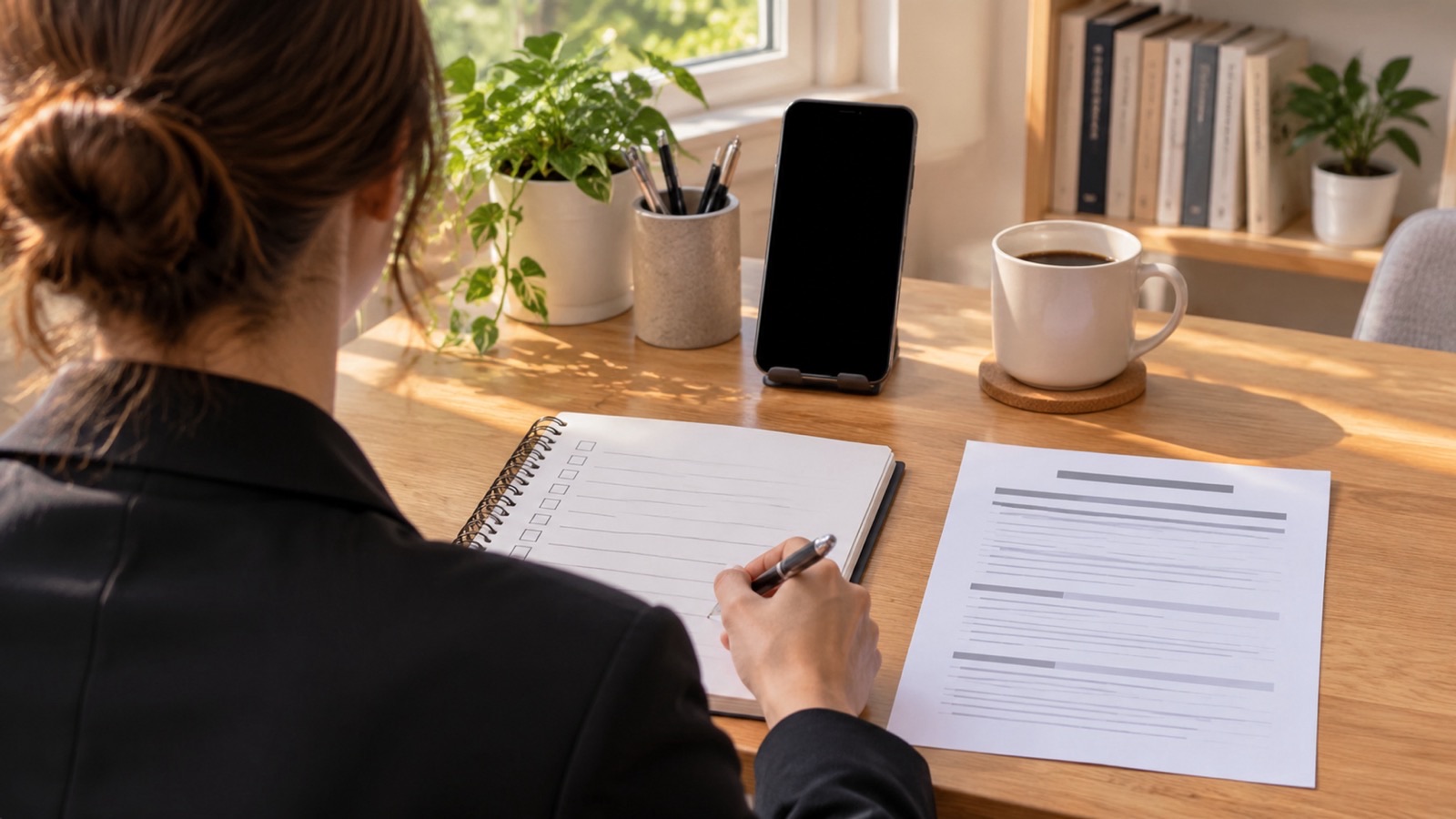
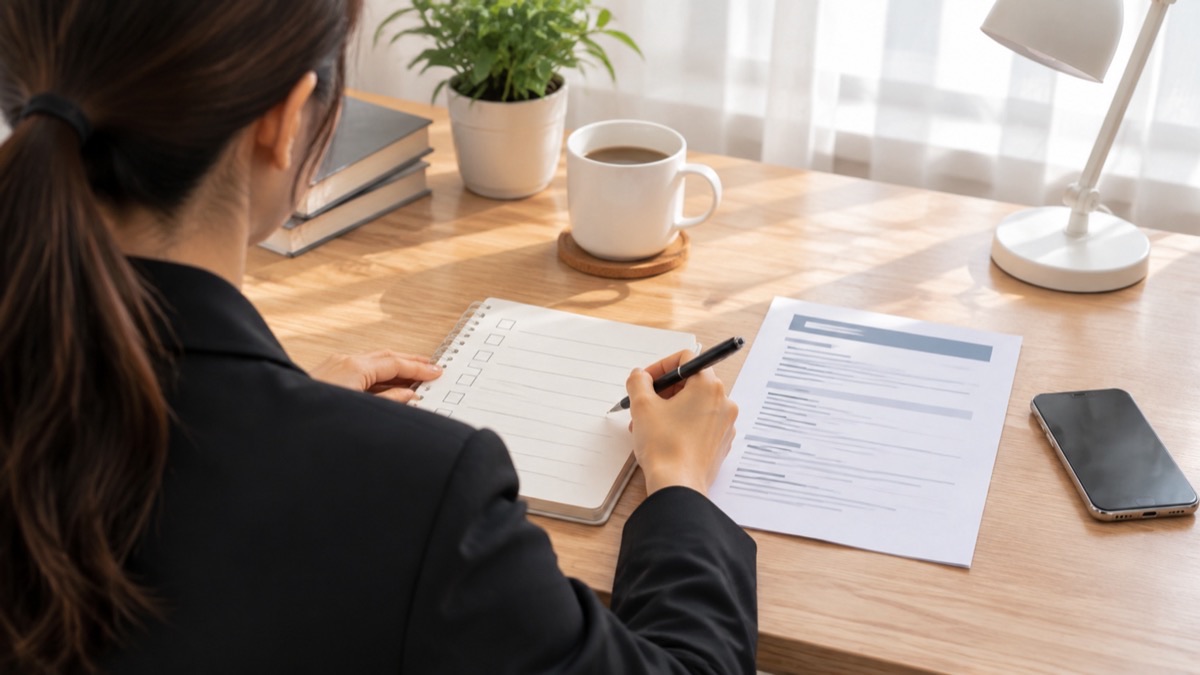 Seven days works if you sequence. Tabs alone don’t.
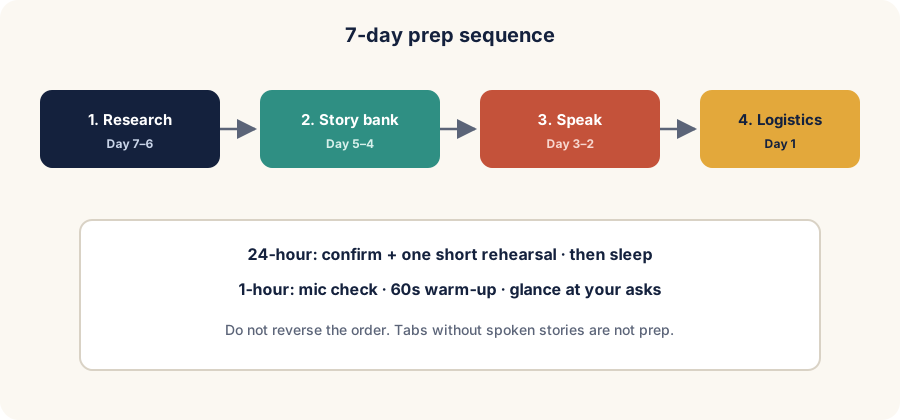 Research → stories → speak → logistics. Don’t flip it.
The 24-hour checklist
Day before = confirm + one short rehearsal. Not a second full week.
- Calendar invite. Dial-in. Parking or transit. Screenshot the meeting ID.
- Skim your five company bullets. Close the twenty new tabs.
- Say your intro once timed. Say your weakest story once. Stop.
- Sleep. Tired voice flattens answers more than a missing bullet.
I’d skip rewriting the resume tonight. I’d skip a brand-new framework “just in case.” Both feel useful. Both steal sleep.
Nerves loud? how to overcome interview anxiety and perform under pressure. Then phone face-down.
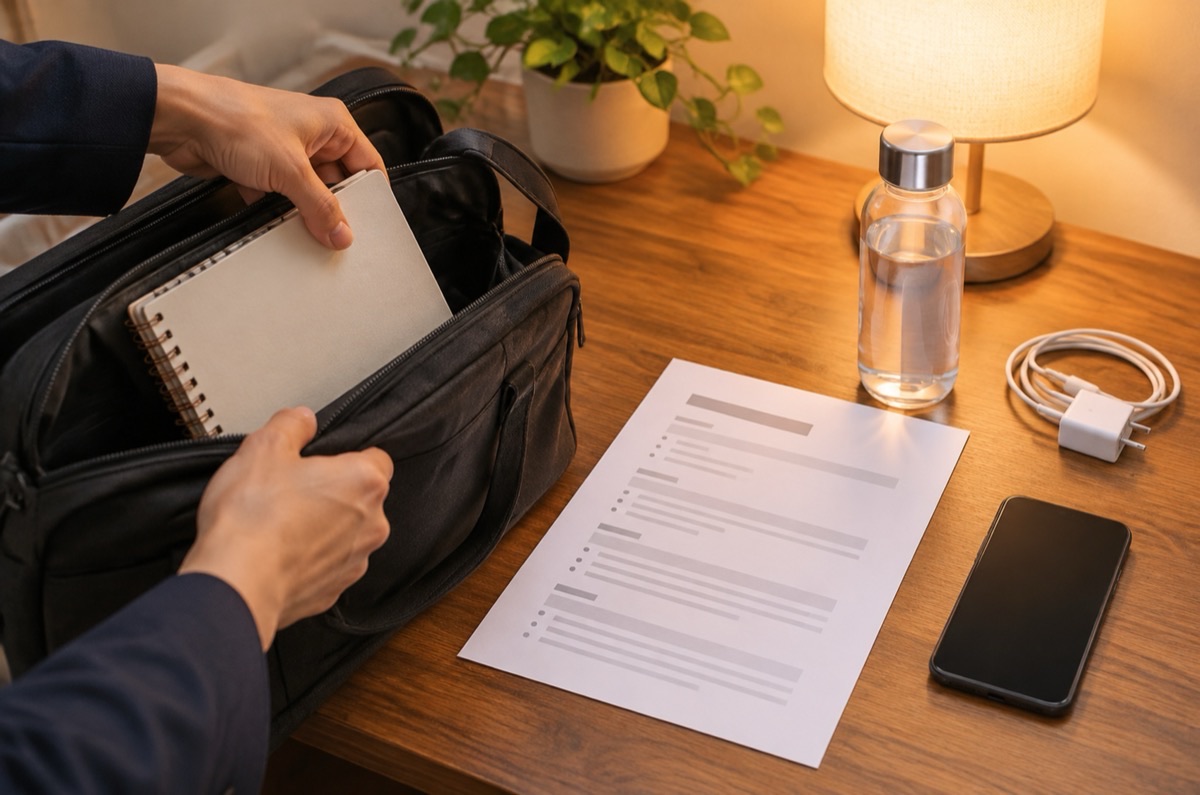 Confirm logistics. One short rehearsal. Then stop.
The 1-hour checklist
Boring on purpose.
- Early to the building, or in the video room five minutes early. Mic and camera once.
- Water. Bathroom. Kill notifications.
- One 60-second warm-up out loud: present role, one win, why this room. Shapes: tell me about yourself sample answers.
- Glance at your ask-them list. Close the doc.
Do not reread the whole story bank in the lobby. You’ll sound like a highlight reel with no breath.
What research is for
Reading ≠ ready.
Useful research makes sentences you can say. “You’re hiring because X shipped and support tickets jumped.” Or “Competitors lean on Y; your blog keeps talking reliability.” Useless research is a tab pile you can’t summarize.
I’d spend more time on the role’s success metrics than the founding myth. Interviewers care what you’ll own next quarter.
Story bank that survives follow-ups
A story dies when the first follow-up is “what was the result?” and you shrug.
Outcome in numbers or clear before/after. Name your part. Name one trade-off. Practice cousins: what would you redo, who disagreed, what broke.
Weak bank: six fluffy wins. Strong bank: fewer stories that bend to conflict, failure, ownership, impact.
Q: Tell me about a time you missed a deadline.
Weak take (fictional): “Uh, we slipped once, but the team learned a lot and it was fine.”
I’d push toward: “Billing API was due Friday. I under-counted the idempotency work. Flagged it Wednesday. Cut scope with the PM. Shipped Monday with the keys in. Ticket volume stayed flat that week. My estimate template now has a multi-system buffer line.”
Q: Why this company?
Weak take: “You’re a leader in the space and I’m passionate about the mission.”
I’d push toward: “Your support blog said ticket volume jumped after the self-serve launch. This role owns the intake triage. I did similar cleanup at a smaller shop: cut first-response time from fourteen hours to six. I want that problem at your scale.”
Same week. Different product.
Practice out loud or don’t call it practice
Silent reading hides the four-second stall. Speaking shows it.
Stand if you fidget. Question on paper. Beep mid-sentence? Stop. That sting teaches pacing. Full loop: how to practice for an interview.
Need a voice interviewer at odd hours? OfferBull on iOS and Android: paste a JD, speak, get follow-ups and STAR suggestions while you rehearse. Before the real call. Not during.
Questions you’ll ask them
Write three. Bring two. Leave room for something you heard in the room.
Good asks point at the work. “What does success look like at ninety days?” “What slowed the last person in this seat?” “How do you decide when requirements conflict?” Skip anything the careers page already answers in one scroll.
They already covered your first ask? Don’t force it. Pivot to the thing that surprised you. Beats reading a list.
Day-of energy
Eat something normal. Caffeine if that’s your Tuesday. Not a new double-espresso experiment.
Video: camera at eye level, light in front, mute the dog Slack. Onsite: early enough to breathe, not forty nervous lobby minutes.
One more warm-up in the car or stairwell beats another LinkedIn scroll.
Common prep mistakes
Only strengths. Conflict and “why us?” need calendar slots too.
Memorizing paragraphs. Cousin question lands, you freeze. Memorize facts and a rough shape.
Ignoring logistics. Wrong time zone beats a perfect STAR.
Saving every mock for the night before. Flat voice. Worse answers.
Over-researching culture pages. Under-practicing the ask. They’ll feel it in minute two.
FAQ
How many days do I need? A focused week beats a vague month. Only 48 hours? Research bullets, three stories, two timed intros, logistics.
Should I memorize answers? Facts and order. Not sentences. Spoken answers bend. Scripts snap.
Don’t know interviewer names? Prep the role and company. Ask who you’ll meet when you confirm. Don’t invent a personal connection.
AI mock practice okay? Tools before the interview: fine. Hidden help during a live interview: no. Rehearsal only.
What to bring onsite? Notebook, pen, water, printed resume if they like paper, charger. Panic optional.
Preparing with OfferBull
Checklists don’t train the stall before sentence one.
OfferBull is an AI mock interview app for iOS and Android. Voice interviewer. You speak. Paste a JD or upload a resume. Follow-ups on what you said. Suggestions and STAR while you practice. English and Chinese.
Before the interview. Not during.
Practice This Out Loud
Tonight: five company bullets. Two stories. Record a 60-second intro and one 90-second behavioral. Replay audio once. Fix one thing. Then a short voice mock with follow-ups. → Practice Now